12 places at the end of the world you have to see once in your life

There are places where you simply stop and stare. Think of a football pitch on bare rock in the middle of the Norwegian Sea, a vault in the permafrost that guards the world's seeds, or a hotel that is rebuilt from ice every winter. Here are twelve real wow places at the end of the world in the far north – what makes them special, when to go and what to watch out for.
In short: You can reach most of these places by plane plus rental car or bus. For the northern lights, travel from late September to late March; for the midnight sun, from late May to mid-July. On hikes and beaches, always read the official safety advice.
1. The Henningsvær football pitch (Lofoten, Norway)
A green pitch on granite, surrounded by sea and mountains. The municipal sports ground at the southern tip of the island of Hellandsøya became world-famous through drone photos; UEFA filmed commercials here. It is freely accessible as long as there is no training. - Best time: February/March (light + northern lights) or June (midnight sun) - Tip: park only in marked spaces, fly drones only under Norwegian rules - Everything about it (in German): Henningsvær guide on polarlichtreise.com
2. North Cape (Norway): a cliff at the end of the world
A 307-metre cliff at 71° north with the Barents Sea below. Midnight sun in summer (approx. 14 May to 31 July), polar night, storms and northern lights in winter. - Winter warning: the last stretch of the E69 is driven in convoy at fixed times. - Everything about it (in German): North Cape in winter
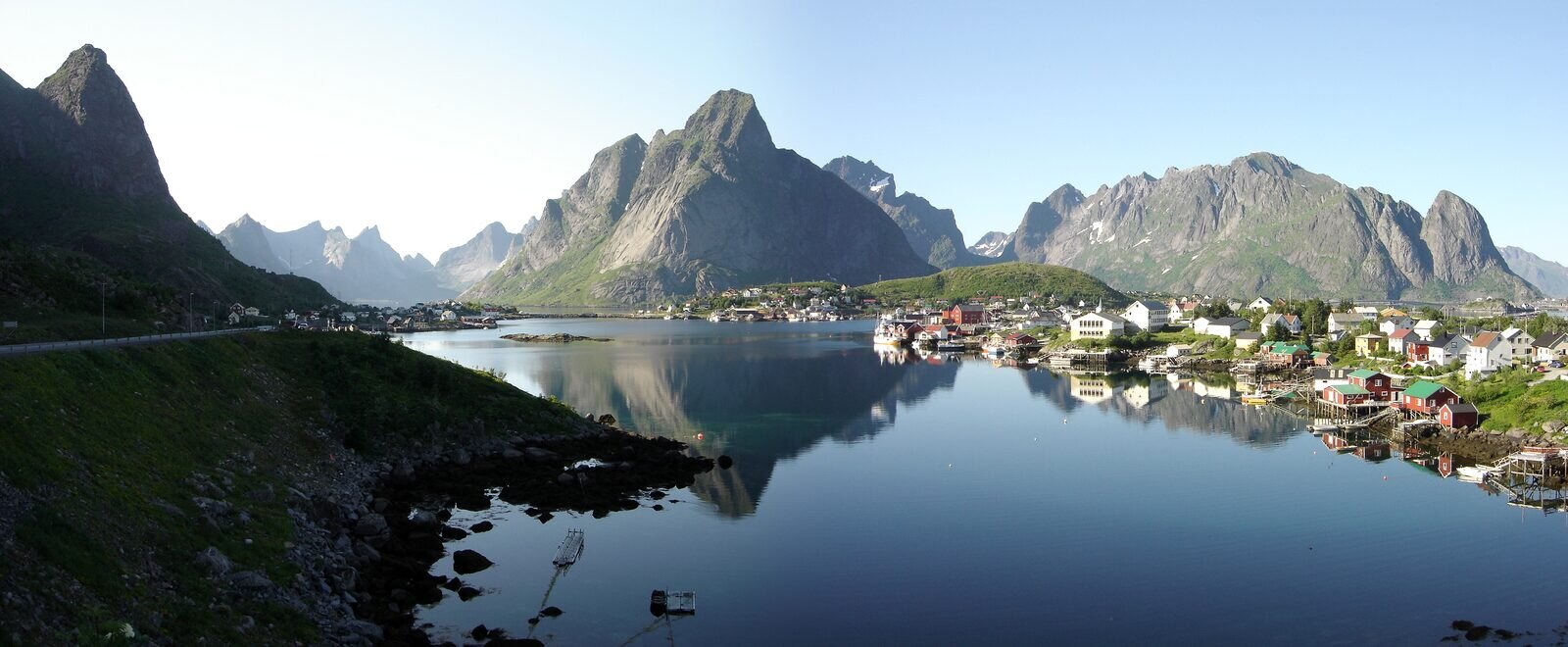
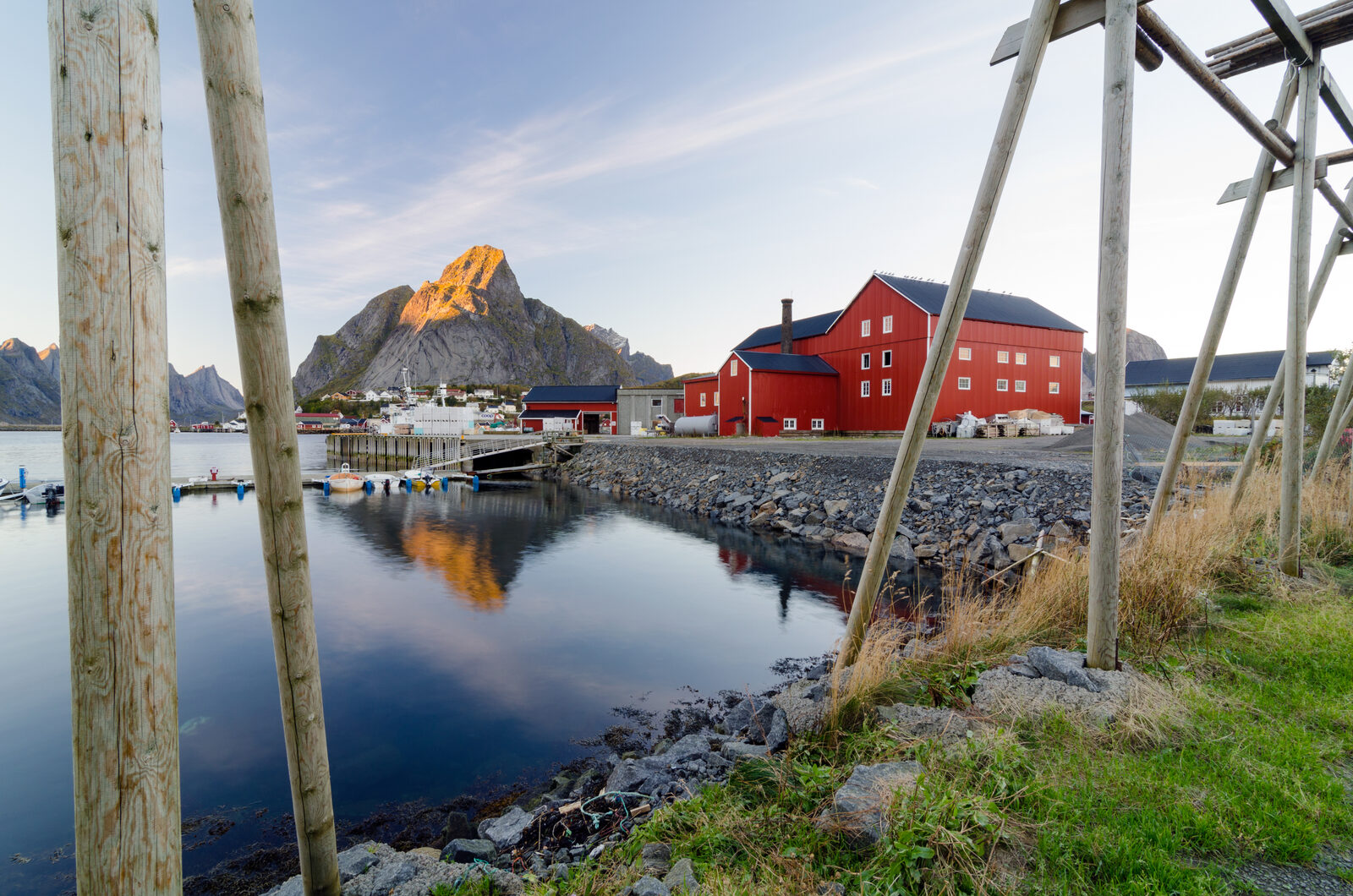
3. Reine (Lofoten, Norway)
Red fishermen's cabins on stilts with vertical granite peaks behind them – one of the most photographed villages in Norway. In winter, stockfish hang on wooden racks – a picture that feels like the end of the world. - Best time: February to April for snow and light - Tip: bridges and roads are narrow – only stop for photos in car parks.
4. Preikestolen (Western Norway)
A flat rock plateau about 600 metres above the Lysefjord. The return hike usually takes several hours. - Best time: summer and early autumn; in winter only with a guide and equipment - Safety: there is no barrier at the edge – keep your distance and check the weather.
5. Trolltunga (Western Norway)
The "Troll's Tongue" juts out horizontally over an abyss. The hike is long and demanding – plan a whole day. - Best time: summer (season depends on snow) - Safety: outside the season only with a guide; start early and bring a head torch.
6. Atlantic Ocean Road (Western Norway)
A short road that runs over islands and curved bridges right along the open sea. In storms, the waves crash up to the roadway. - Best time: autumn storms for drama, summer for relaxed driving - Safety: in bad weather, check the road information from Statens vegvesen.
7. Svalbard Global Seed Vault (Spitsbergen) at the end of the world
A vault inside the mountain near Longyearbyen where seeds from all over the world are stored in the permafrost – a kind of backup copy for humanity's agriculture. Visitors only see the entrance; the vault itself is not open to the public. - Important: Svalbard is not part of the Schengen Area – bring your passport or ID card. Outside Longyearbyen there are polar bears: excursions only with a guide.
8. Icehotel Jukkasjärvi (Swedish Lapland)
Every winter the hotel near Kiruna is rebuilt from ice and snow from the Torne River, and artists design the rooms. In spring it melts back into the river. - Best time: December to March - Tip: one night in an ice room is enough for most people – sleep warm before and after.
9. Glass igloos in Finnish Lapland
Lie in a warm bed and watch the northern lights through the glass roof. Options include Saariselkä, Levi and the area around Rovaniemi. - Best time: September to March - Comparison (in German): Glass igloo & aurora cabin
10. Reindeer and husky sledding (Lapland)
Glide silently through the snow behind reindeer or cross a frozen lake with a barking husky team. Reindeer herding is part of Sámi culture – choose operators who show it respectfully. - Best time: December to March - Family tips (in German): Husky safari with children
11. Iceland: Blue Lagoon, Diamond Beach & Reynisfjara
- Blue Lagoon: milky-blue, warm water in a lava field near Keflavík. Book ahead and check the authorities' current notice on volcanic activity on the Reykjanes peninsula.
- Diamond Beach (Jökulsárlón): chunks of ice from the glacier lagoon glitter on black sand.
- Reynisfjara: a black beach with basalt columns – and one of the most dangerous beaches in Europe. Sneaker waves can suddenly run far up the beach. Always keep a wide distance from the water, never turn your back on the sea and follow the warning signs.
- Winter driving tips (in German): Iceland in winter by rental car
12. Ilulissat & Múlafossur (Greenland & Faroe Islands)
- Ilulissat (Greenland): in the UNESCO World Heritage Icefjord, huge icebergs drift from the Sermeq Kujalleq glacier into the sea. Greenland is not part of the Schengen Area.
- Múlafossur (Faroe Islands): a waterfall plunges from the cliff straight into the sea near the village of Gásadalur. The Faroe Islands are not part of the Schengen Area either.
Best time to travel to the end of the world at a glance
| Destination | Northern lights (approx. late Sep–late Mar) | Midnight sun (approx. late May–mid Jul) | Note |
|---|---|---|---|
| Lofoten, North Cape | yes | yes | mind winter roads |
| Lapland (FI/SE) | yes | yes | Icehotel in winter only |
| Western Norway | rare | long days | hikes in summer |
| Iceland | yes | long bright nights | beach safety! |
| Svalbard | yes (polar night) | yes | go out only with a guide |
| Greenland, Faroe Islands | yes | long days | not Schengen |
Entry requirements for the end of the world – official sites only
Even at the end of the world, the paperwork depends on where exactly you go. Norway, Sweden, Finland and Iceland are part of the Schengen Area; EU citizens only need a valid passport or ID card. Svalbard, Greenland and the Faroe Islands are not part of the Schengen Area. Non-EU citizens: the EU Entry/Exit System (EES) has been phased in since 12 October 2025, and according to the EU, ETIAS is due to start in the last quarter of 2026 – information only on travel-europe.europa.eu. Austrian citizens: bmeia.gv.at travel information.
Beware of rip-offs: sites offering "ETIAS" or entry forms for high fees are often intermediaries. Only use .europa.eu, .gv.at or embassy websites.
Checklist for wow places at the end of the world
- Passport/ID (check for Svalbard, Greenland, Faroe Islands)
- Rental car with winter tyres, road information app
- Shoe spikes, head torch, power bank
- Weather and avalanche/beach warnings checked
- Respect: no drones over people, take your rubbish with you, respect private land
FAQ: travelling to the end of the world
TipWhich of these places is easiest to reach?
The Blue Lagoon and Iceland's south coast – short flights, good roads in summer, many tours.
TipWhere am I most likely to see the northern lights?
In northern Norway, Lapland and Iceland between late September and late March, with clear skies and dark nights.
TipDo I need a passport for Svalbard?
Svalbard is not Schengen – there is a passport check. Bring your passport or ID card and check the rules with the Governor of Svalbard (sysselmesteren.no).
SafetyIs Reynisfjara dangerous?
Yes, because of sudden giant waves. Keep a wide distance from the water and follow the warning signs.
TimingHow long are the hikes to Preikestolen and Trolltunga?
Preikestolen: about 8 km return, 4–5 hours, around 500 m of ascent. Trolltunga: about 27 km return from the Skjeggedal car park (P2) or 20 km from Mågelitopp (P3), 10–12 hours. Outside summer, go only with a guide.
TipCan I go inside the Svalbard Global Seed Vault?
No. The vault is closed to the public – you can only see the entrance from outside, about 1 km from Longyearbyen airport. A virtual tour is available on seedvault.no.
SafetyHow cold is it inside the Icehotel?
The ice rooms and art suites stay at about −5 °C to −8 °C. You sleep in thermal sleeping bags on reindeer skins; warm rooms and saunas are available in the heated buildings next door.
As of 01.11.2026. Prices, rules and opening hours change – please check the official sources before you travel. Sources: visitnorway.com (Preikestolen, Trolltunga), seedvault.no, icehotel.com.
Sources
- FIFA (2021) and Wikipedia on Henningsvær; Statens vegvesen (North Cape convoy, 15.09.2025); visitnordkapp.net; Wikipedia "North Cape"; IATA on EES/ETIAS; official tourism sites visitnorway.com, visitfinland.com, visitsweden.com, visiticeland.com, visitgreenland.com, visitfaroeislands.com. As of 10/2026.