Internet and power on the road: how we stay online as a travelling family
Whether we are filming northern lights in Lapland or working from the dunes in Brazil – without internet and power nothing works for us. This guide shows the setup we use: SIM and eSIM, Starlink for remote places and the right power bank.
In short: In the EU and EEA your home SIM usually works at no extra cost. Outside, an eSIM is the easiest option. For truly remote places Starlink is the backup that keeps working when the local network fails. Always carry a power bank in your hand luggage.
1. Mobile data: SIM, roaming or eSIM?
- EU/EEA: with "roam like at home" you use your normal plan in all EU countries plus Norway, Iceland and Liechtenstein. Check your provider's fair-use limit. Switzerland and the UK are not included.
- Outside Europe: an eSIM is installed in minutes before departure and works on arrival – no hunting for a SIM shop. Your phone must support eSIM and be unlocked.
- Local SIM: often the cheapest for long stays, but you usually need your passport and some time in a shop.
2. When the network fails: Starlink
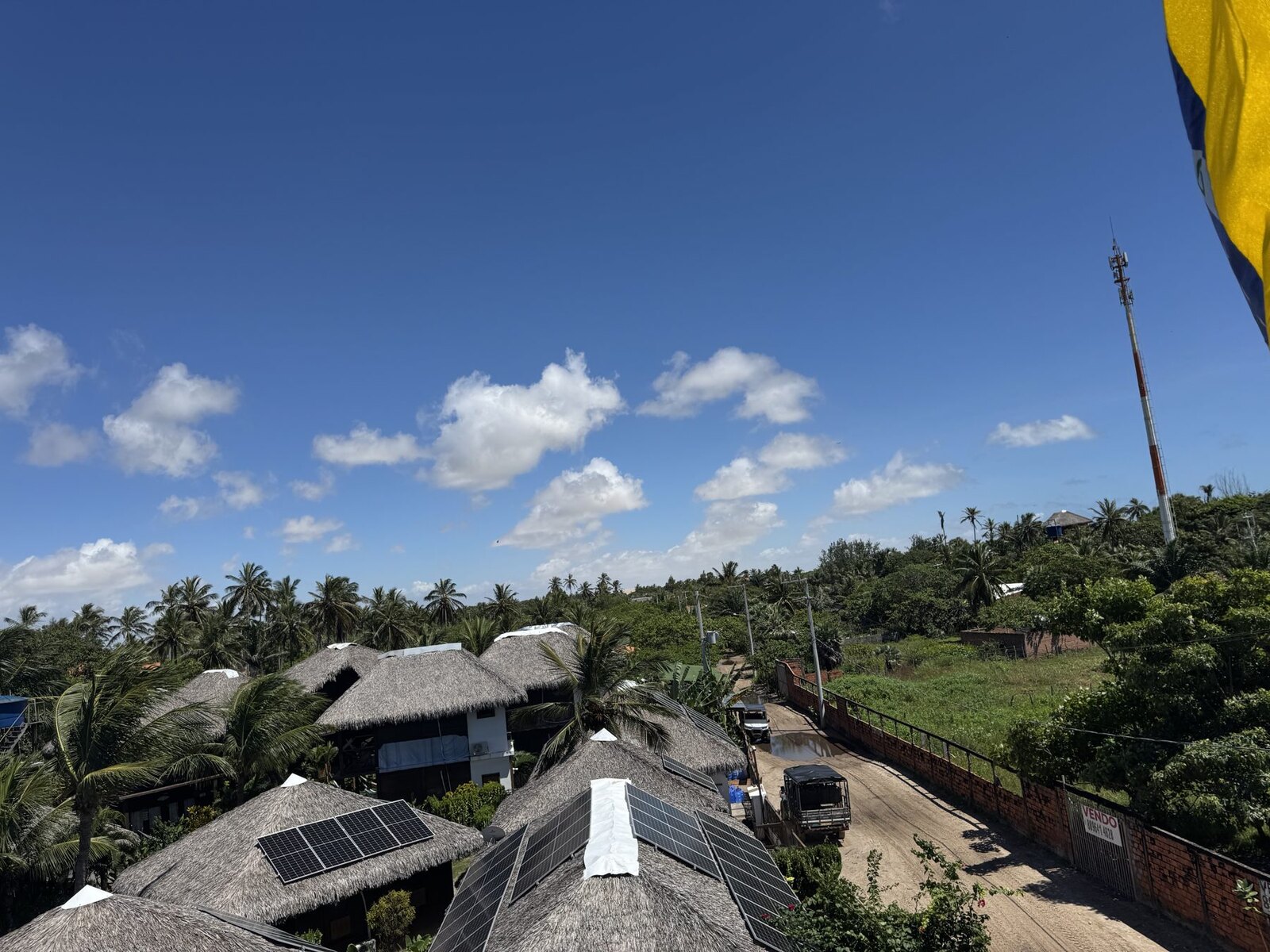
In Atins, a small village at the Lençóis Maranhenses in Brazil, we learned why a backup matters. The whole area depended on a single mobile mast. When it failed, every provider and every eSIM was offline – for hours, sometimes days. With Starlink plugged into power or a power bank, we were online the whole time.
- Starlink Mini is small enough for a backpack and can run on a strong USB-C power bank.
- It needs a clear view of the sky – no roofs, few trees.
- Check the coverage map and the rules for roaming plans before you travel.
Get Starlink with our referral link ↗
3. Internet and power: the right power bank
- Capacity: 20,000 mAh charges a phone several times. For laptops and Starlink Mini choose USB-C Power Delivery with high output (60–100 W).
- Flights: power banks belong in hand luggage only. Up to 100 Wh is generally allowed; 100–160 Wh usually needs airline approval. Check your airline's rules.
- Cold: batteries lose capacity in frost – keep the power bank inside your jacket.
- Plugs: Scandinavia and most of Europe use type C/F, Brazil type N (type C often fits too). A small universal adapter with USB-C solves most cases.
4. Our packing list for internet and power
- Phone with eSIM support, unlocked
- Power bank with USB-C PD (hand luggage)
- Universal adapter and one multi-port USB-C charger
- Starlink Mini for remote places
- Offline maps and downloaded tickets – in case nothing works at all
5. Money online, without fees
Internet and power are not the only costs on the road: paying for eSIMs, tours and apartments in foreign currencies adds up. We use Wise privately and for our business: you hold several currencies and pay abroad at the real exchange rate.
FAQ: internet and power on the road
TipDoes my home SIM work in Norway and Iceland?
Usually yes – both are part of the EEA and covered by "roam like at home". Check your plan's fair-use limit.
TechCan I run Starlink Mini from a power bank?
Yes, with a strong USB-C Power Delivery power bank. How long it lasts depends on capacity and usage.
TechCan I take a power bank on a plane?
Only in hand luggage. Up to 100 Wh is generally fine; above that up to 160 Wh with the airline's approval.
Data, Starlink and power bank size
CostsHow much mobile data does a travelling family really use?
Chat and maps: about 0.3–0.5 GB per person per day. Video calls: roughly 1–1.5 GB per hour. Netflix in HD: up to 3 GB per hour. Two adults plus kids sharing one hotspot should plan 20–30 GB per week.
TechCan I use Starlink in every country?
No. It only works where Starlink is licensed – check the official Starlink coverage map before you go. Roam plans are meant for travel; if you stay abroad for more than two months, Starlink may ask you to move your account to the new country. Some countries do not allow terminals to be imported.
TechHow big should my power bank be for a long travel day?
It depends on what needs internet and power that day. Phones only: 10,000 mAh (about 37 Wh) gives roughly two full charges. With a laptop: 20,000–25,000 mAh and at least 65 W USB-C PD (about 74–90 Wh) – still below the 100 Wh airline limit.
As of 01.11.2026. Prices, rules and opening hours change – please check the official sources before you travel. Sources: Netflix Help Center (data usage), starlink.com (coverage map, Roam), IATA dangerous goods guidance.